

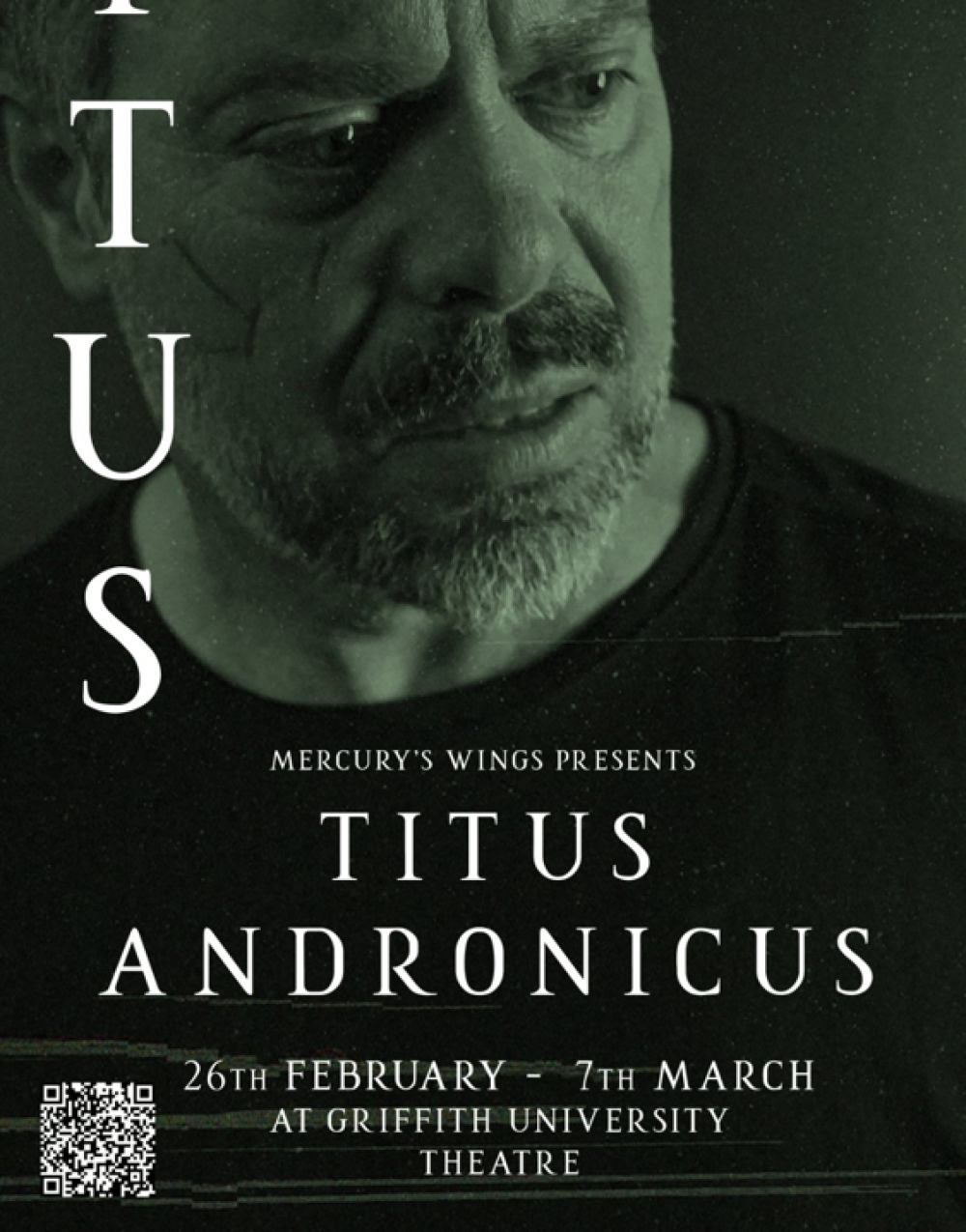
Titus Andronicus |
||
|
|
||
|
William Shakespeare |
|
Anne Maree-Garcia |
|
|
||
|
Isabella Laredo-Standage Rhyll Davis |
Tom Marie-Sainte James Anderson |
Ethan Hough James Mitchell |
Follow Us:
Director’s Note
Titus Andronicus: A play, a pattern, precedent, and lively warrant!
Thank you for joining us this evening. We appreciate you doing this and I believe I need to offer you a content warning. There are some challenging and confronting scenes in this play.
Whenever this play is produced or written about there is inevitably a reference to the violence and the mayhem that slice through its pages and scenes. Inevitably there is discussion about whether Shakespeare did indeed write it, or indeed which parts were his and which ones were written by someone else (notably one George Peel). It is also a play that has produced constant arguments about its quality, its meaning and its place in the Shakespeare canon.
When it first appeared, it was very popular with its audience and took the best takings of the season at the box office in 1594. It has however been regularly characterised as a very poor play, particularly from the early 18th century on, but in recent years it has been rediscovered and received acclaimed productions from Peter Brook, Deborah Warner and Julie Taymor’s recent film with Anthony Hopkins as Titus.
What we think we have is one of Shakespeare's early plays that show his quality and his promise; it is full of extraordinary characters, quite astonishing situations and reflections on the struggles that puctuate human existence and development.
The Setting:
At the beginning we find ourselves in a fictitious Rome; Titus Andronicus returns from ten years of war with the Goths in which he is now victorious. He returns to a city that is in political uproar with the two sons of the previous and now dead Caesar now in open dispute verging on violence in the streets about who should be the next emperor.
Into this fractious situation comes Titus, with his prisoners the Queen of the Goths, Tamora and her sons as his prisoners. Each have done and will do great damage to each other in the name of revenge.
The Sources of the Play
The play is built on layers of classical references from classical Greek and Roman stories, characters and plays. This is important as the characters are very aware of these stories, and they use them to understand their situations and to devise their options in responding according to these stories. Indeed, they regularly shape and justify their actions according to these stories. Indeed, as Titus says, they provide a pattern, precedent, and lively warrant!
These stories come particularly from Ovid and Seneca, whose works accentuate themes of revenge, transformation, and violence.
Key classical references and influences in the play include:
Ovid's Metamorphoses: This is the key story, particularly that of Philomela, who is raped by Tereus, has her tongue cut out, and reveals the crime through sewing a tapestry.
Seneca's Tragedies: The play is heavily influenced by Seneca's violent, revenge-driven tragedies, most notably Thyestes, in which a father is served his own children in a pie, directly paralleling Titus feeding Tamora her sons.
Virgil's Aeneid: Characters and events frequently echo the fall of Troy and the founding of Rome, with references to Aeneas, Sinon, and Hecuba.
Roman Mythology & Gods: The Roman world of mythical characters is frequently referenced (e.g., Jupiter, Apollo, Diana), alongside mythical figures like the giant Enceladus).
Historical Figures & Literature: The text alludes to figures from Roman history and literature, such as Horace, Livy, and Plutarch, as well as the story of Lucretia. Lucretia concerns a virtuous noblewoman whose ravishment leads her suicide and sparked a rebellion. It is a story that plays a mythical role in the building of Rome.
Why a production of this play now?
Why bring it into the 21st century for Gold Coast theatre makers and to you, our audience? As simply as I can put it, it is to do with the choices that we make, why we make them and our seemingly constant recourse to violence. Roman was in some ways a very sophisticated society but its existence was underpinned by particularly violent culture, Elizabethan England was similarly built on a similar shifting and flawed base.
It seems to me that in our times while we are extraordinarily sophisticated, our communities are still confronted by the violent choices and actions that individuals, communities, groups, organisations and countries take to defend, to enact revenge, to claim territory or simply to carry out their frustrations.
How much revenge is enough? How much do we need?
Is it as Titus quotes in Latin: Terras Austraea Reliquit (or Austraea the goddess of justice has quit the earth) and we must somehow survive as we can.
Cast
Creative Team
Dr Patrick Mitchell
Anne Maree-Garcia
Claudine Anderson
Liam Cowey
Meet the Company
Nicole Amaya
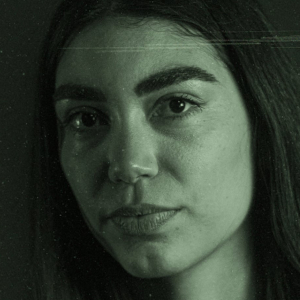 Nicole Amaya completed her Bachelor of Fine Arts (Drama) in 2017 and Master of Teaching (Secondary) in 2019 at QUT. Despite being a full-time drama and english teacher, she continues to develop her practice as a theatre maker and performer outside of work. Nicole’s relationship with Mercury’s Wings kick-started in 2021 when she was asked to play the role of Goneril in the company’s production of “King Lear” (2021, 2022). She was then cast as Hippolyta/Titania in the 2023 production of “A Midsummer Nights Dream”. Nicole has also collaborated and performed in “Be Our Witness” at Backbone Festival and Anywhere Festival (2018, 2019), “Tangerine Hour” at Metro Arts (2021), and “Pierrot” at Backbone Theatre (2022). She is also a lover of poetry and has presented her works at the Queensland Poetry Festival (2017, 2019).
Isabella Laredo-Standage
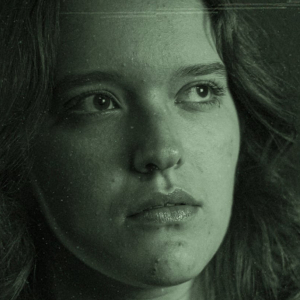 Isabella Laredo-Standage is an Australian-Colombian actor based on the Gold Coast, acting, singing and performing since she was 6 years old.
Titus Andronicus is Isabella’s fourth time working with Mercury’s Wings, following other Shakespeare performances such as King Lear and A Midsummer Night’s Dream and she plans to continue her training following this production.
Isabella is a Griffith University Alum and is currently studying a Master of Secondary Teaching to become an English, History and Drama Teacher.
She loves theatre and classical literature and enjoys finding the connections and nuances between the modern world and the languages of the past, in this case, Shakespearean Verse and Prose.
Isabella Laredo-Standage is an Australian-Colombian actor based on the Gold Coast, acting, singing and performing since she was 6 years old.
Titus Andronicus is Isabella’s fourth time working with Mercury’s Wings, following other Shakespeare performances such as King Lear and A Midsummer Night’s Dream and she plans to continue her training following this production.
Isabella is a Griffith University Alum and is currently studying a Master of Secondary Teaching to become an English, History and Drama Teacher.
She loves theatre and classical literature and enjoys finding the connections and nuances between the modern world and the languages of the past, in this case, Shakespearean Verse and Prose.
Rhyll Davis
Bailey Seymour
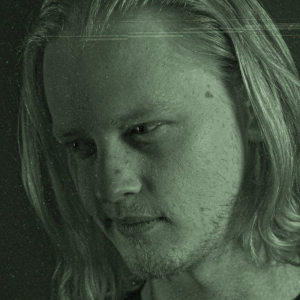 Bailey Seymour-Smith is a Gold Coast based actor who has been working with Mercury’s Wing’s since 2019. He’s been featured in productions such as, King Lear, Thursday’s Child and A Midsummer Night’s Dream and now Titus Andronicus.
Bailey has trained in Mercury’s Wing’s Suzuki workshops since he was a teenager and aims to utilize his training in all of his performances.
He now calls upon his training to tackle the complex and unpredictable character of Saturninus in this production of Titus Andronicus.
Bailey Seymour-Smith is a Gold Coast based actor who has been working with Mercury’s Wing’s since 2019. He’s been featured in productions such as, King Lear, Thursday’s Child and A Midsummer Night’s Dream and now Titus Andronicus.
Bailey has trained in Mercury’s Wing’s Suzuki workshops since he was a teenager and aims to utilize his training in all of his performances.
He now calls upon his training to tackle the complex and unpredictable character of Saturninus in this production of Titus Andronicus.
James Anderson
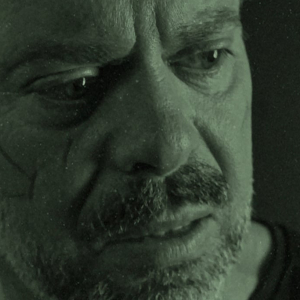 James' previous roles include Bottom, Oberon and Theseus in A Midsummer Night's Dream, Edmund and The Fool in King Lear, Caliban in The Tempest, Da in Thursday's Child and Vladimir in Waiting for Godot.
James trained under Jacqui Carroll and John Nobbs at OzFrank Theatre, Brisbane in the Suzuki Actor Training Method and was a company member for over ten years. he has also studied with Gecko Theatre and Complicite in London and was part of the International Actors program at Shakespeare's Globe.
He recently work with Parkbench Films on The Celebrant, which has won a number of awards around the world. James was nominated in the supporting actor category at the IndieX festival in LA and also the Indie Short Festival LA.
He is co-artistic director of Mercury's Wings, with Claudine Anderson.
James' previous roles include Bottom, Oberon and Theseus in A Midsummer Night's Dream, Edmund and The Fool in King Lear, Caliban in The Tempest, Da in Thursday's Child and Vladimir in Waiting for Godot.
James trained under Jacqui Carroll and John Nobbs at OzFrank Theatre, Brisbane in the Suzuki Actor Training Method and was a company member for over ten years. he has also studied with Gecko Theatre and Complicite in London and was part of the International Actors program at Shakespeare's Globe.
He recently work with Parkbench Films on The Celebrant, which has won a number of awards around the world. James was nominated in the supporting actor category at the IndieX festival in LA and also the Indie Short Festival LA.
He is co-artistic director of Mercury's Wings, with Claudine Anderson.
William Neville
Tom Marie-Sainte
James Mitchell
Jay Marinak
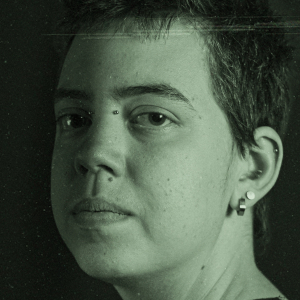 This is Jay Marinak's first time working Mercury's wings theatre company and first time preforming for multiple nights in a row. He has previously done 'The Girl Who Cried Wolf', 'The Chapel, The Fire, and the Dead Cat' and some others. Outside of acting Jay is passionate about activism, you can catch him at every protest for Palestine or with Students for Palestine.
Bradley Fulcher
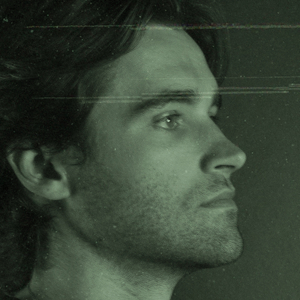 After growing up in Johannesburg, South Africa, Bradley developed a love for theatre from a young age. During high school, he performed in productions such as High School Musical (Ryan) and Hairspray (Corny Collins), before spending a year in 2019 with the Christ’s College drama department in Christchurch, New Zealand. This experience allowed him to explore preforming arts from a new perspective, working behind the scenes, co-directing, and contributing to sound design across multiple projects.
Following a five-year hiatus from acting, Bradley shifted his focus to his studies, completing a Bachelor of Science Honours degree in Environmental Science and Geography at the University of Pretoria, graduating with distinction. In 2024, he committed his career to the sustainability sector and is now actively pursuing opportunities in environmental consulting across Australia.
Currently on a gap year on the Gold Coast, Bradley works at Saint Stephen’s College and is assisting with their upcoming musical production of Freaky Friday. Though this marks his Shakespearean debut, Bradley is thrilled to be returning to the stage and is grateful to the cast of Titus Andronicus at Mercury’s Wings for welcoming him so warmly.
After growing up in Johannesburg, South Africa, Bradley developed a love for theatre from a young age. During high school, he performed in productions such as High School Musical (Ryan) and Hairspray (Corny Collins), before spending a year in 2019 with the Christ’s College drama department in Christchurch, New Zealand. This experience allowed him to explore preforming arts from a new perspective, working behind the scenes, co-directing, and contributing to sound design across multiple projects.
Following a five-year hiatus from acting, Bradley shifted his focus to his studies, completing a Bachelor of Science Honours degree in Environmental Science and Geography at the University of Pretoria, graduating with distinction. In 2024, he committed his career to the sustainability sector and is now actively pursuing opportunities in environmental consulting across Australia.
Currently on a gap year on the Gold Coast, Bradley works at Saint Stephen’s College and is assisting with their upcoming musical production of Freaky Friday. Though this marks his Shakespearean debut, Bradley is thrilled to be returning to the stage and is grateful to the cast of Titus Andronicus at Mercury’s Wings for welcoming him so warmly.


